Why is a human voiceover still relevant when AI voices are so good these days?
Let me explain why with a little story.
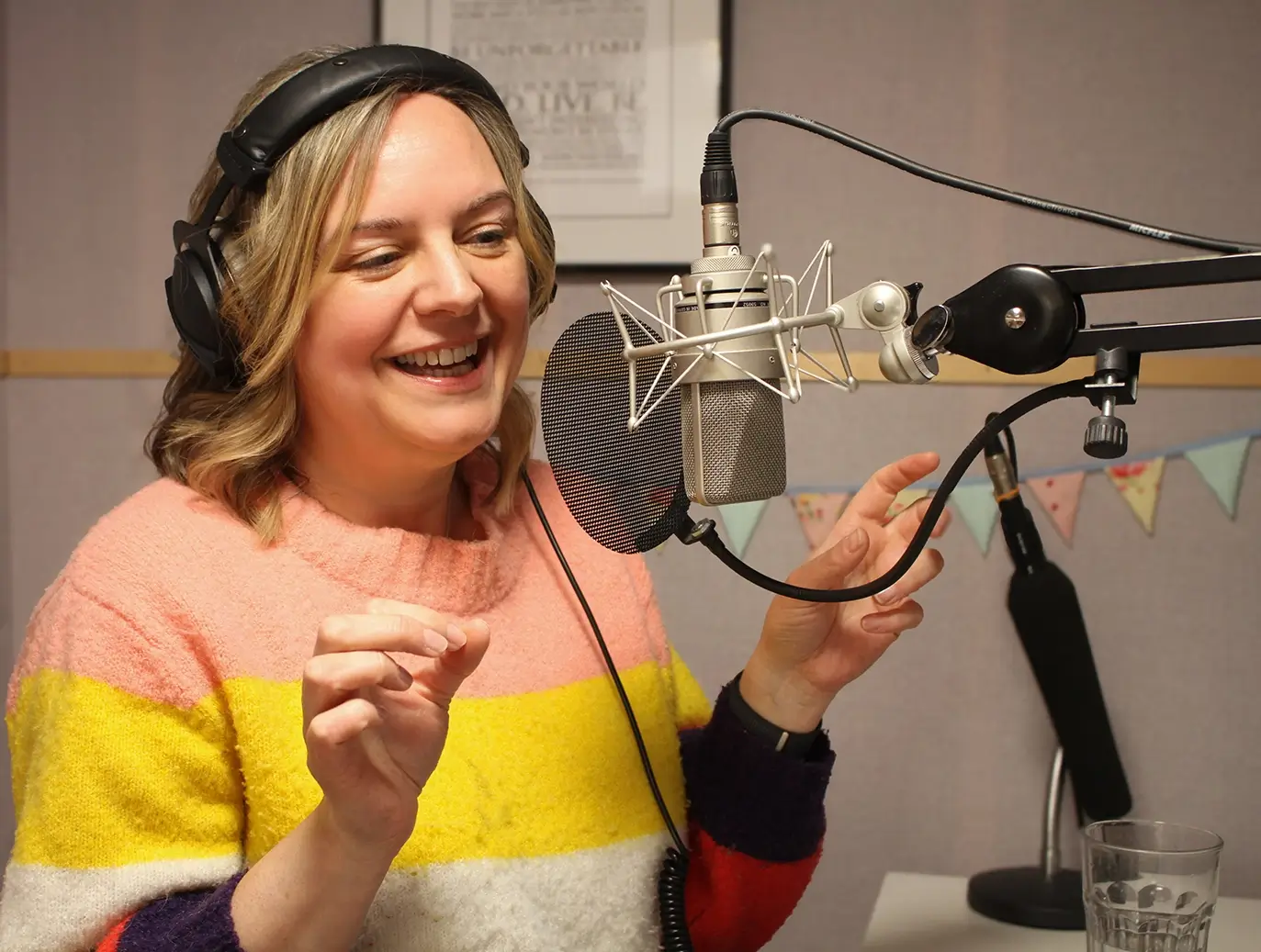
Recently, I was coming to the end of a 3 hour session for a new client. We’d powered through more of the scripts than they’d expected and as we were wrapping up for the day, the producer, engineer and I got chatting about AI.
I mentioned how I’d recently been sent a guide track for a corporate video and was somewhat dismayed to hear the AI voice they’d used was actually pretty good. Admittedly it didn’t fit the project, but the output was the most realistic I’d heard and I was a bit shaken up. But then the engineer I was working with said:
“Getting an AI voice right for the project takes far more time than working with a real, human voiceover like you.”
Hang on, what?
“All the little eyebrow raises, the shrugs, the gentle knowing nudges, and the subtle humour is a painstaking exercise to try and create with an AI voice. The adjustments are long and tedious, and sometimes it just can’t be done. Whereas, when we work with a professional voice actor, you just get it”.
“Even when the direction is…” the producer waved her hands like she was giving it some serious welly with a pair of imaginary cheerleading pom-poms.
And maybe this is the key.
AI voices simply can’t grasp the nuance
Direction isn’t always something that can be communicated in words alone. And when we do use words, we might be connecting to a shared experience, trying to capture a feeling, and using emotional shorthand.
How can AI – which can only assemble data from the information it’s been trained on – possibly understand something that we often don’t know how to fully describe ourselves?
Working with humans is simply better if…
- You value nuance, flexibility, and creativity.
- You want to save yourself a load of time.
- You want to direct using feeling and emotion.
- You want your chosen voice actor to connect to your script in a way that you can sense, but can’t quite put into words.
While the headlines may have been about how amazing an AI voice is, once you dig deeper it quickly becomes clear just how limited this technology is.
Creatives work best when they can flow with other creatives, bouncing ideas, and developing something entirely new through these moments of connection.
Increasingly, I’m hearing stories of producers returning to trusted human voiceover artists to re-record work that an AI voice couldn’t quite carry. The output wasn’t connecting. There was feedback that “something meaningful was missing”.
I haven’t had that call myself – yet – although I’d be naive to think AI hasn’t quietly replaced me somewhere, probably on an IVR or on-hold system. But the excitement around this “amazing” new technology seems to be cooling, and I’m feeling more hopeful than I was 12 months ago.